
4D live imaging and computational modeling of a functional gut-on-a-chip evaluate how peristalsis facilitates enteric pathogen invasion

Organ Model: Intestine (Caco2)

Application: Infectious Disease

Abstract: Physical forces are essential to biological function, but their impact at the tissue level is not fully understood. The gut is under continuous mechanical stress because of peristalsis. To assess the influence of mechanical cues on enteropathogen invasion, we combine computational imaging with a mechanically active gut-on-a-chip. After infecting the device with either of two microbes, we image their behavior in real time while mapping the mechanical stress within the tissue. This is achieved by reconstructing three-dimensional videos of the ongoing invasion and leveraging on-manifold inverse problems together with viscoelastic rheology. Our results show that peristalsis accelerates the destruction and invasion of intestinal tissue by Entamoeba histolytica and colonization by Shigella flexneri. Local tension facilitates parasite penetration and activates virulence genes in the bacteria. Overall, our work highlights the fundamental role of physical cues during host-pathogen interactions and introduces a framework that opens the door to study mechanobiology on deformable tissues.
Modeling Inflammatory Immune Cell Recruitment and Response with the Colon Intestine-Chip

Webinar Abstract

Immune cell recruitment is a key driver of complex human diseases such as inflammatory bowel disease (IBD) but has remained challenging to model due to the biological complexity and species-specific nature of immune response.

In this webinar, we show data on how researchers can use Emulate Organ-on-a-Chip technology to model colon-specific immune cell recruitment, including immune cell vascular attachment, migration, activation, and downstream effector functions.

The Colon Intestine-Chip is a physiologically relevant barrier model incorporating primary human colonic organoids and intestinal microvascular endothelial cells in a dynamic microenvironment with tissue-relevant mechanical forces.

By perfusing peripheral blood mononuclear cells (PBMCs) through the vascular channel in the presence of priming cytokines/chemokines, researchers can model the selective migration of ‘gut-specific’ PBMCs into the epithelial channel, where they secrete IBD-associated cytokines, kick off organ-specific inflammatory cascades, and induce the hallmark ‘leaky gut’ phenotype. In addition, the model has been demonstrated to recapitulate the efficacy and mechanism of clinically relevant, anti-inflammatory IBD therapeutics.

Watch this on-demand webinar to learn how you can use the Colon Intestine-Chip to develop more effective, targeted therapeutic strategies for IBD across an expanded pool of inflammatory pathways in a single model.

In this webinar, you will learn:

  • Key challenges in modeling gut inflammation-specific immune cell recruitment
  • How to use Organ-on-a-Chip technology to create a more human-relevant model of the colon
  • How the Colon Intestine-Chip can be used model immune recruitment and assess the efficacy and mechanism of action of anti-inflammatory drugs

Modeling Inflammation-Specific Immune Cell Recruitment in the Colon Intestine-Chip

Overview

Inflammatory bowel disease (IBD) is a complex pathology with a large, rapidly growing, unmet medical need. The two methods typically used to study IBD, animals and conventional in vitro models, suffer from poor translatability to humans, the ability to only model a narrow range of disease features, and many more issues that prevent the creation of effective IBD therapeutics.

Emulate’s Colon Intestine-Chip was previously developed as a primary human vascularized model of the intestinal barrier capable of recapitulating physiologic cell composition, morphology, and barrier function. This application uses the Colon Intestine-Chip to model the progression of IBD driven by immune cells more completely than previous models.

Key Highlights

  • Applicable in studies of inflammation-specific immune recruitment from vasculature into epithelial tissue and subsequent downstream effects.
  • Treatable with clinically relevant IBD therapeutics to reduce PBMC recruitment and protect the epithelium from downstream cytokine response.
  • The most complete picture of human IBD pathogenesis and a more human-relevant platform for drug candidate efficacy and mechanism-of-action studies.

Nutritional deficiency in an intestine-on-a-chip recapitulates injury hallmarks associated with environmental enteric dysfunction

Organ Model: Intestine (Duodenum)

Application: Model Development

Abstract: Environmental enteric dysfunction (EED)-a chronic inflammatory condition of the intestine-is characterized by villus blunting, compromised intestinal barrier function and reduced nutrient absorption. Here we show that essential genotypic and phenotypic features of EED-associated intestinal injury can be reconstituted in a human intestine-on-a-chip lined by organoid-derived intestinal epithelial cells from patients with EED and cultured in nutrient-deficient medium lacking niacinamide and tryptophan. Exposure of the organ chip to such nutritional deficiencies resulted in congruent changes in six of the top ten upregulated genes that were comparable to changes seen in samples from patients with EED. Chips lined with healthy epithelium or with EED epithelium exposed to nutritional deficiencies resulted in severe villus blunting and barrier dysfunction, and in the impairment of fatty acid uptake and amino acid transport; and the chips with EED epithelium exhibited heightened secretion of inflammatory cytokines. The organ-chip model of EED-associated intestinal injury may facilitate the analysis of the molecular, genetic and nutritional bases of the disease and the testing of candidate therapeutics for it.

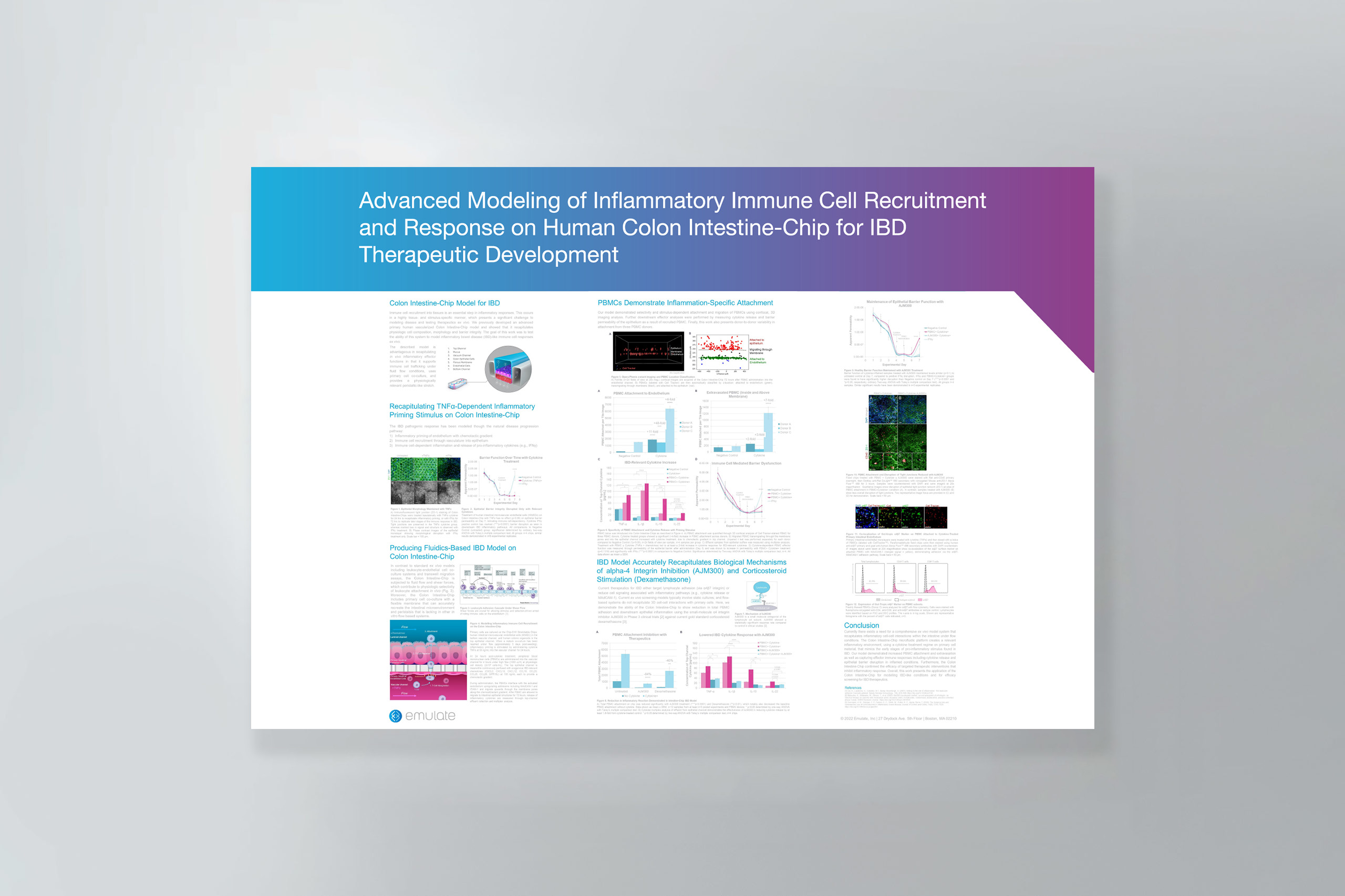
Advanced Modeling of Inflammatory Immune Cell Recruitment and Response on Human Colon Intestine-Chip for IBD Therapeutic Development

Abstract

Immune cell recruitment into tissues is an essential step in inflammatory responses. This occurs in a highly tissue- and stimulus-specific manner, which presents a significant challenge to modeling disease and testing therapeutics ex vivo. We previously developed an advanced primary human vascularized Colon Intestine-Chip model and showed that it recapitulates physiologic cell composition, morphology and barrier integrity. The goal of this work was to test the ability of this system to model inflammatory bowel disease (IBD)-like immune cell responses.

The described model is advantageous in recapitulating in vivo inflammatory effector functions in that it supports immune cell trafficking under fluid flow conditions, uses primary cell co-culture, and provides a physiologically relevant peristaltic-like stretch.

Combining Human Organoids and Organ-on-a-Chip Technology to Model Intestinal Region-Specific Functionality

Organ Model: Intestine (Colon and Duodenum)

Application: Model Development

Abstract: The intestinal mucosa is a complex physical and biochemical barrier that fulfills a myriad of important functions. It enables the transport, absorption, and metabolism of nutrients and xenobiotics while facilitating a symbiotic relationship with microbiota and restricting the invasion of microorganisms. Functional interaction between various cell types and their physical and biochemical environment is vital to establish and maintain intestinal tissue homeostasis. Modeling these complex interactions and integrated intestinal physiology in vitro is a formidable goal with the potential to transform the way new therapeutic targets and drug candidates are discovered and developed. Organoids and Organ-on-a-Chip technologies have recently been combined to generate human-relevant intestine chips suitable for studying the functional aspects of intestinal physiology and pathophysiology in vitro. Organoids derived from the biopsies of the small (duodenum) and large intestine are seeded into the top compartment of an organ chip and then successfully expand as monolayers while preserving the distinct cellular, molecular, and functional features of each intestinal region. Human intestine tissue-specific microvascular endothelial cells are incorporated in the bottom compartment of the organ chip to recreate the epithelial-endothelial interface. This novel platform facilitates luminal exposure to nutrients, drugs, and microorganisms, enabling studies of intestinal transport, permeability, and host-microbe interactions. Here, a detailed protocol is provided for the establishment of intestine chips representing the human duodenum (duodenum chip) and colon (colon chip), and their subsequent culture under continuous flow and peristalsis-like deformations. We demonstrate methods for assessing drug metabolism and CYP3A4 induction in duodenum chip using prototypical inducers and substrates. Lastly, we provide a step-by-step procedure for the in vitro modeling of interferon gamma (IFN?)-mediated barrier disruption (leaky gut syndrome) in a colon chip, including methods for evaluating the alteration of paracellular permeability, changes in cytokine secretion, and transcriptomic profiling of the cells within the chip.

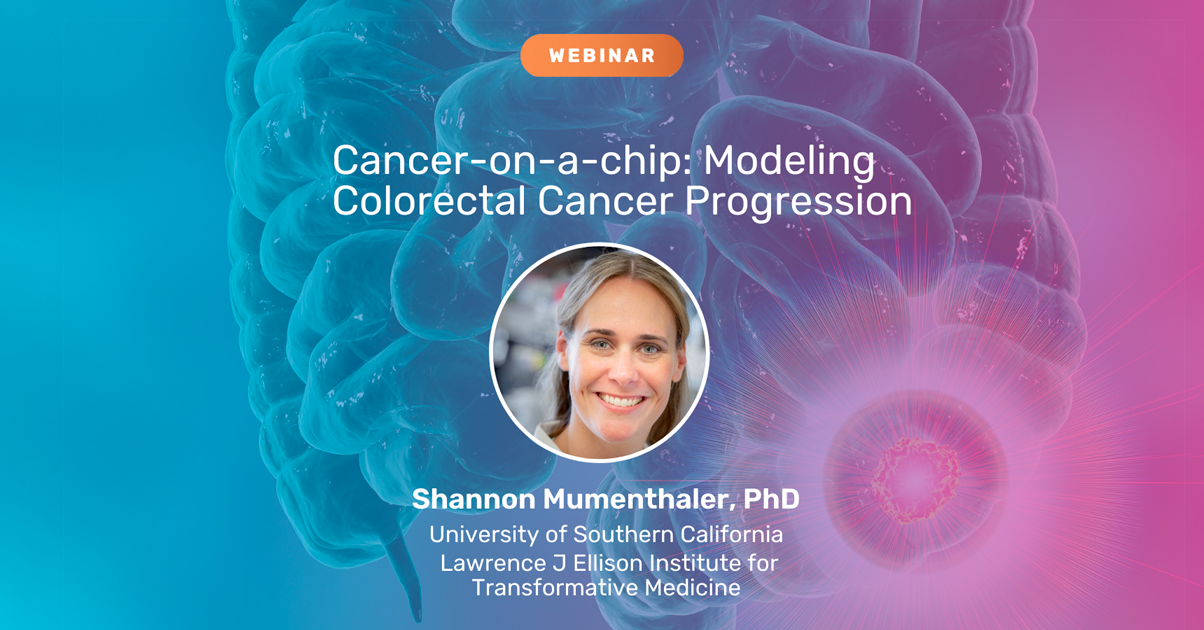
Cancer-on-a-chip: Modeling Colorectal Cancer Progression

Webinar Abstract

Colorectal cancer (CRC) is one of the deadliest cancers worldwide with over 900,000 people dying from the disease each year (Siegel et al., 2021). In the United States, the 5-year survival rate for patients with metastatic CRC is less than 15% (Siegel et al., 2020). To address this dismal outcome, there is an urgent need to better understand and ultimately control aspects of cancer progression.  

In a recent paper published in iScience, researchers from the Lawrence J Ellison Institute for Transformative Medicine describe an in vitro Organ-Chip model that emulates in vivo tissue structure and the tumor microenvironment (TME) to better understand intravasation, an early step in metastasis.  

In this on-demand webinar, Dr. Mumenthaler discusses recent advancements made through combining Organ-Chip models with high content imaging and mass spectrometry-based metabolomics to improve our understanding of ​microenvironmental contributions to colorectal cancer progression. 

 Study results that will be discussed:  

  • Development and characterization of CRC-on-chip 
  • Metabolic comparison of Intestine Chips versus CRC chips 
  • Examination of tumor cell intravasation 
  • CRC cells exhibit phenotypic heterogeneity during intravasation 
  • Mechanical and biochemical cues from the TME impact CRC invasion 

Establishment of physiologically relevant oxygen gradients in microfluidic organ chips

Organ Model: Intestine (Duodenum)

Application: Model Development

Abstract: In vitro models of human organs must accurately reconstitute oxygen concentrations and gradients that are observed in vivo to mimic gene expression, metabolism, and host-microbiome interactions. Here we describe a simple strategy to achieve physiologically relevant oxygen tension in a two-channel human small intestine-on-a-chip (Intestine Chip) lined with primary human duodenal epithelium and intestinal microvascular endothelium in parallel channels separated by a porous membrane while both channels are perfused with oxygenated medium. This strategy was developed using computer simulations that predicted lowering the oxygen permeability of poly-dimethylsiloxane (PDMS) chips in specified locations using a gas impermeable film will allow the cells to naturally decrease the oxygen concentration through aerobic respiration and reach steady-state oxygen levels <36 mm Hg (<5%) within the epithelial lumen. The approach was experimentally confirmed using chips with embedded oxygen sensors that maintained this stable oxygen gradient. Furthermore, Intestine Chips cultured with this approach supported formation of a villus epithelium interfaced with a continuous endothelium and maintained intestinal barrier integrity for 72 h. This strategy recapitulates in vivo functionality in an efficient, inexpensive, and scalable format that improves the robustness and translatability of Organ Chip technology for studies on microbiome as well as oxygen sensitivity.

Multiplexed imaging and effluent analysis to monitor cancer cell intravasation using a colorectal cancer-on-chip

Organ Model: Intestine (Colorectal cancer)

Application: Cancer

Abstract: Despite colorectal cancer’s (CRC) prevalence, its progression is not well understood. The microfluidic organ-on-chip (OOC) model described herein recreates the epithelial-endothelial tissue-tissue interface, fluid flow, and mechanical forces that exist in vivo, making it an attractive model to understand and ultimately disrupt CRC intravasation. This protocol provides step-by-step details for tumor cell seeding to create a CRC-on-chip model, chip effluent collection and analysis, and on-chip imaging to monitor tumor cell invasion within a more physiologically relevant microenvironment. For complete details on the use and execution of this protocol, please refer to Strelez et al. (2021).

Enteric coronavirus infection and treatment modeled with an immunocompetent human intestine-on-a-chip

Organ Model: Intestine (Duodenum)

Application: Infectious Disease

Abstract: Many patients infected with coronaviruses, such as SARS-CoV-2 and NL63 that use ACE2 receptors to infect cells, exhibit gastrointestinal symptoms and viral proteins are found in the human gastrointestinal tract, yet little is known about the inflammatory and pathological effects of coronavirus infection on the human intestine. Here, we used a human intestine-on-a-chip (Intestine Chip) microfluidic culture device lined by patient organoid-derived intestinal epithelium interfaced with human vascular endothelium to study host cellular and inflammatory responses to infection with NL63 coronavirus. These organoid-derived intestinal epithelial cells dramatically increased their ACE2 protein levels when cultured under flow in the presence of peristalsis-like mechanical deformations in the Intestine Chips compared to when cultured statically as organoids or in Transwell inserts. Infection of the intestinal epithelium with NL63 on-chip led to inflammation of the endothelium as demonstrated by loss of barrier function, increased cytokine production, and recruitment of circulating peripheral blood mononuclear cells (PBMCs). Treatment of NL63 infected chips with the approved protease inhibitor drug, nafamostat, inhibited viral entry and resulted in a reduction in both viral load and cytokine secretion, whereas remdesivir, one of the few drugs approved for COVID19 patients, was not found to be effective and it also was toxic to the endothelium. This model of intestinal infection was also used to test the effects of other drugs that have been proposed for potential repurposing against SARS-CoV-2. Taken together, these data suggest that the human Intestine Chip might be useful as a human preclinical model for studying coronavirus related pathology as well as for testing of potential anti-viral or anti-inflammatory therapeutics.