
Human immunocompetent Organ-on-Chip platforms allow safety profiling of tumor-targeted T-cell bispecific antibodies

eLife (2021)

Abstract

Traditional drug safety assessment often fails to predict complications in humans, especially when the drug targets the immune system. Here, we show the unprecedented capability of two human Organs-on-Chips to evaluate the safety profile of T-cell bispecific antibodies (TCBs) targeting tumor antigens. Although promising for cancer immunotherapy, TCBs are associated with an on-target, off-tumor risk due to low levels of expression of tumor antigens in healthy tissues. We leveraged in vivo target expression and toxicity data of TCBs targeting folate receptor 1 (FOLR1) or carcinoembryonic antigen (CEA) to design and validate human immunocompetent Organs-on-Chips safety platforms. We discovered that the Lung-Chip and Intestine-Chip could reproduce and predict target-dependent TCB safety liabilities, based on sensitivity to key determinants thereof, such as target expression and antibody affinity. These novel tools broaden the research options available for mechanistic understandings of engineered therapeutic antibodies and assessing safety in tissues susceptible to adverse events.

A Novel Microphysiological Colon Platform to Decipher Mechanisms Driving Human Intestinal Permeability

Cellular and Molecular Gastroenterology and Hepatology (2021)

Abstract

Background & Aims
The limited availability of organoid systems that mimic the molecular signatures and architecture of human intestinal epithelium has been an impediment to allowing them to be harnessed for the development of therapeutics as well as physiological insights. We developed a microphysiological Organ-on-Chip platform designed to mimic properties of human intestinal epithelium leading to insights into barrier integrity.

Methods
We combined the human biopsy-derived LGR5+ organoids and Organ-on-Chip technologies to establish a micro-engineered human Colon Intestine-Chip. We characterized the proximity of the model to human tissue and organoids maintained in suspension by RNAseq analysis, and their differentiation to IECs on the Colon Intestine-Chip under variable conditions. Furthermore, organoids from different donors were evaluated to understand variability in the system. Our system was applied to understanding epithelial barrier and characterizing mechanisms driving the cytokine-induced barrier disruption.

Results
Our data highlight the importance of the endothelium and the in vivo tissue-relevant dynamic microenvironment in the Colon Intestine-Chip in the establishment of a tight monolayer of differentiated, polarized organoid-derived intestinal epithelial cells. We confirmed the effect of interferon-gamma (IFNγ) on the colonic barrier and identified reorganization of apical junctional complexes, and induction of apoptosis in the IECs as mediating mechanisms. We demonstrate that in the human Colon Intestine-Chip exposure to interleukin 22 (IL-22) induces disruption of the barrier, unlike its described protective role in experimental colitis in mice.

Conclusion
We developed a human Colon Intestine-Chip platform and demonstrated its value in the characterization of the mechanism of action of IL-22 in the human epithelial barrier. This system can be used to elucidate, in a time- and challenge-dependent manner, the mechanism driving the development of leaky gut in humans and to identify associated biomarkers.

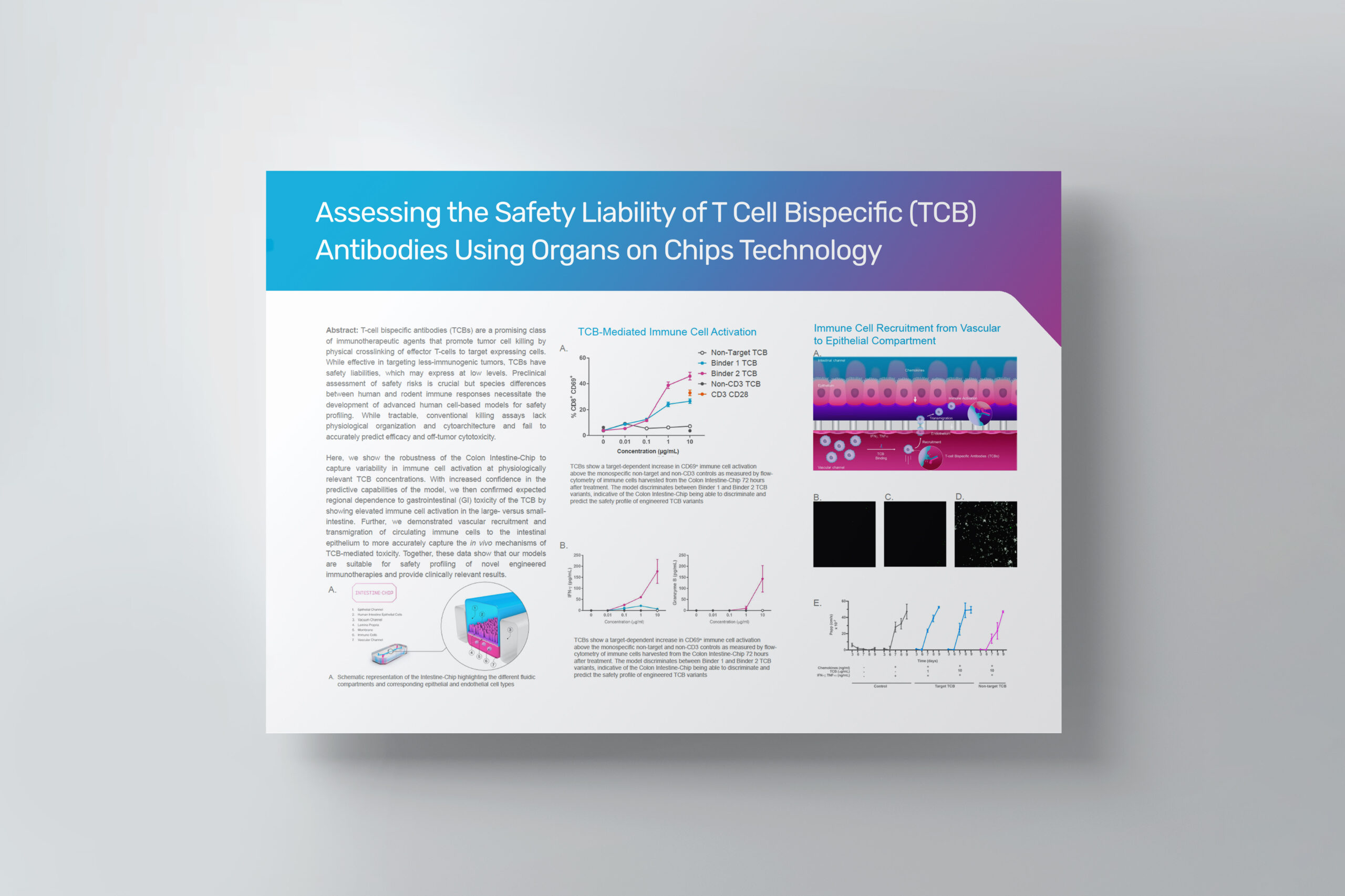
Assessing the Safety Liability of T Cell Bispecific (TCB) Antibodies Using Organs-on-Chips Technology

Abstract

T-cell bispecific antibodies (TCBs) are a promising class of immunotherapeutic agents that promote tumor cell killing by physical crosslinking of effector T-cells to target expressing cells.

While TCBs are effective in targeting less-immunogenic tumors, they are subject to safety liabilities in normal tissues, which may express low levels of the target. Preclinical assessment of safety risks is crucial but species differences between human and rodent immune responses necessitate the development of advanced human cell-based models for TCB safety profiling. While conventional killing assays are experimentally tractable, they lack physiological organization and cytoarchitecture and often fail to accurately predict efficacy and off-tumor cytotoxicity. Here, we show the robustness of our Intestine-Chip to capture variability in immune cell activation at physiologically relevant TCB concentrations when immune cells are directly applied to the apical epithelium. With increased confidence in the predictive capabilities of the model, we then confirmed expected regional dependence to gastrointestinal (GI) toxicity of the TCB by showing elevated immune cell activation in the large- versus small-intestine. Further, we have demonstrated vascular recruitment and transmigration of circulating immune cells to the intestinal epithelium to more accurately capture the in vivo mechanisms of TCB-mediated toxicity. Together, these data show that our models are suitable for safety profiling of novel engineered immunotherapies and provide clinically relevant results.

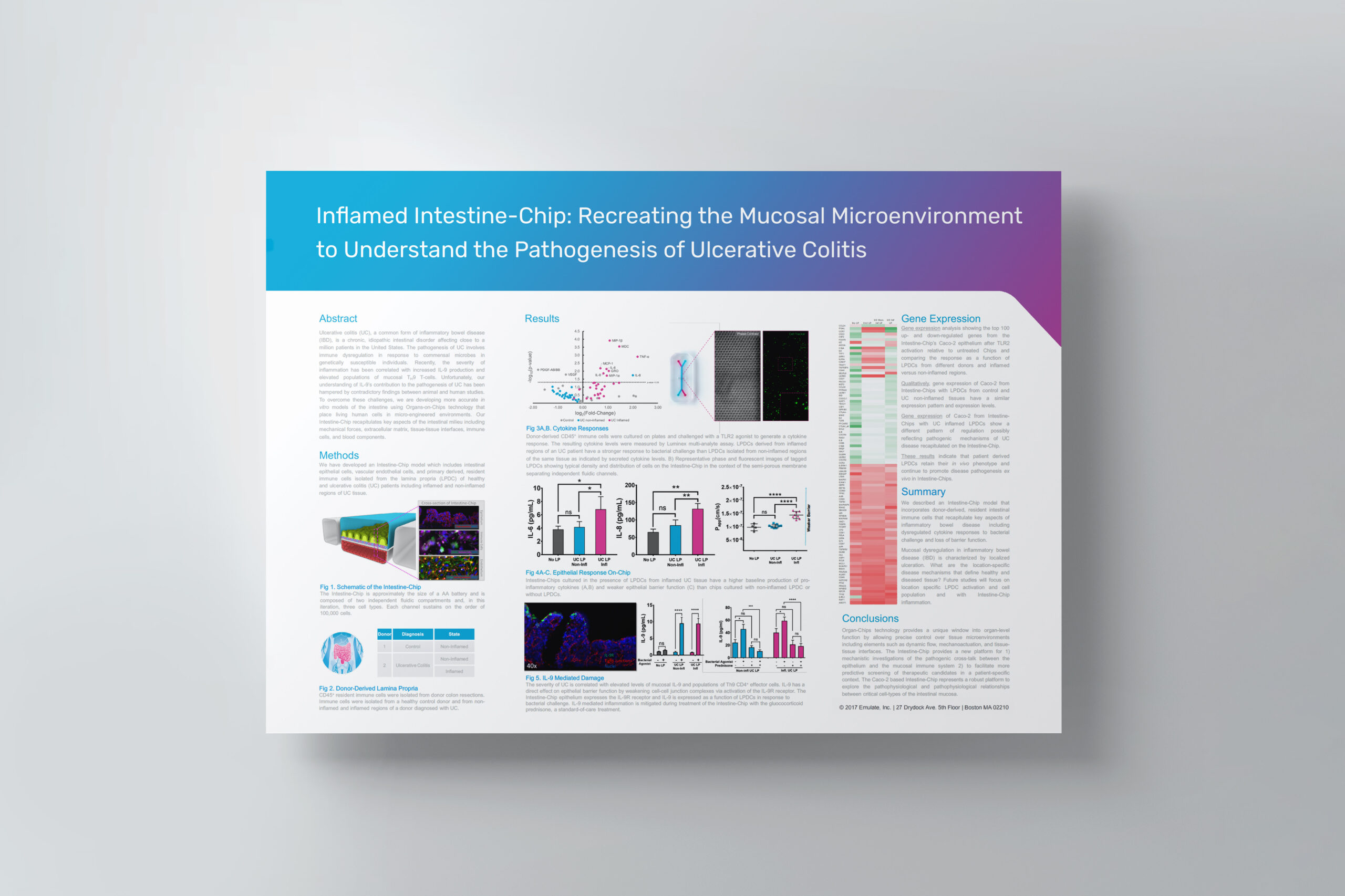
Inflamed Intestine-Chip: Recreating the Mucosal Microenvironment to Understand the Pathogenesis of Ulcerative Colitis

Abstract

Ulcerative colitis (UC), a common form of inflammatory bowel disease (IBD), is a chronic, idiopathic intestinal disorder affecting close to a million patients in the United States. The pathogenesis of UC involves immune dysregulation in response to commensal microbes in genetically susceptible individuals. Recently, the severity of inflammation has been correlated with increased IL-9 production and elevated populations of mucosal TH9 T-cells. Unfortunately, our understanding of IL-9’s contribution to the pathogenesis of UC has been hampered by contradictory findings between animal and human studies. To overcome these challenges, we are developing more accurate in vitro models of the intestine using Organs-on-Chips technology that place living human cells in micro-engineered environments. Our Intestine-Chip recapitulates key aspects of the intestinal milieu including mechanical forces, extracellular matrix, tissue-tissue interfaces, immune cells, and blood components.

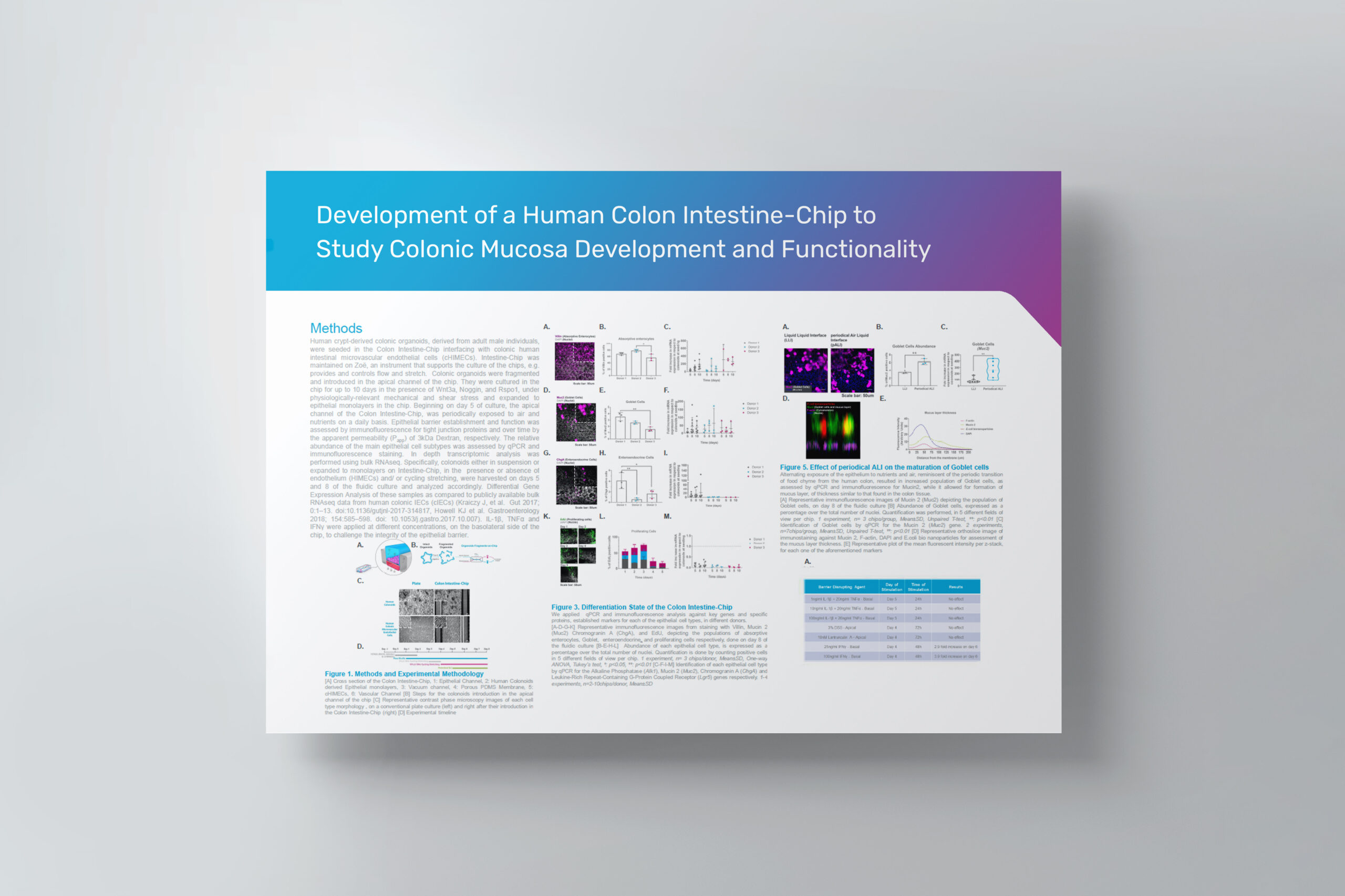
Development of a Human Colon Intestine-Chip to Study Colonic Mucosa Development and Functionality

Methods

Human crypt-derived colonic organoids, derived from adult male individuals, were seeded in the Colon Intestine-Chip interfacing with colonic human intestinal microvascular endothelial cells (cHIMECs). Intestine-Chip was maintained on Zoë Culture Module, an instrument that supports the culture of the chips, e.g. provides and controls flow and stretch. Colonic organoids were fragmented and introduced in the apical channel of the chip. They were cultured in the chip for up to 10 days in the presence of Wnt3a, Noggin, and Rspo1, under physiologically-relevant mechanical and shear stress and expanded to epithelial monolayers in the chip. Beginning on day 5 of culture, the apical channel of the Colon Intestine-Chip, was periodically exposed to air and nutrients on a daily basis. Epithelial barrier establishment and function was assessed by immunofluorescence for tight junction proteins and over time by the apparent permeability (Papp) of 3kDa Dextran, respectively. The relative abundance of the main epithelial cell subtypes was assessed by qPCR and immunofluorescence staining. In depth transcriptomic analysis was performed using bulk RNAseq. Specifically, colonoids either in suspension or expanded to monolayers on Intestine-Chip, in the presence or absence of endothelium (HIMECs) and/ or cycling stretching, were harvested on days 5 and 8 of the fluidic culture and analyzed accordingly. Differential Gene Expression Analysis of these samples as compared to publicly available bulk RNAseq data from human colonic IECs (cIECs) (Kraiczy J, et al. Gut 2017; 0:1–13. doi:10.1136/gutjnl-2017-314817, Howell KJ et al. Gastroenterology 2018; 154:585–598. doi: 10.1053/j.gastro.2017.10.007). IL-1β, TNFα and IFNγ were applied at different concentrations, on the basolateral side of the chip, to challenge the integrity of the epithelial barrier.

Cytokine-Mediated Inflammation in the Colon Intestine-Chip

Overview

Learn how the Colon Intestine-Chip can be used to study mechanisms of cytokine-mediated barrier inflammation in a time-, concentration-, and donor-dependent manner, as well as the efficacy of anti-inflammatory therapeutics.

Duodenum Intestine-Chip for Modeling Human Physiology

Overview

Learn how our Duodenum Intestine-Chip can be applied to emulate the complex functions and physiology of the human intestine.

In this technical note, we review how our Chip-S1® Stretchable Chip can be used to create a comprehensive recapitulation of the human duodenum.

Key highlights:

  • Co-culture model incorporates both organoid-derived primary epithelial cells and primary human intestinal microvascular endothelial cells (HIMECs)
  • Flow and cyclic stretch recreate mechanical forces that improve cell morphology and function
  • Organ-specific microenvironment results in a transcriptomic profile that’s closer to in vivo compared to organoids alone
  • Potential applications include assessment of transporter activity and CYP450-mediated metabolism

Characterization of the Colon Intestine-Chip

Overview

Learn how the unique combination of organoid-derived epithelium, colon-specific endothelium, and mechanical forces delivered by Organ-on-a-Chip technology lead to the most comprehensive commercially-available model of the colonic epithelial-endothelial interface.

Duodenum Intestine-Chip for Toxicity Assessment

Overview

Gastrointestinal toxicity is one of the most common clinical side effects caused by therapeutics and other xenobiotics. Accurately predicting the risk of intestinal toxicity during preclinical drug development could help improve quality of drug treatments and reduce unwanted side effects in the clinic.

In this application note, we review how our Duodenum Intestine-Chip was applied to assess the toxicity of indomethacin—a known GI toxicant.

Key Highlights:

  • Co-culture model incorporates organoid-derived primary epithelial cells and primary human small intestinal microvascular endothelial cells (siHIMECs).
  • The Duodenum Intestine-Chip emulates intestinal tissue and recreates in vivo-like physiology for use in assessment of drug safety.
  • Indomethacin safety assessed across multiple endpoints, including I-FABP accumulation, LDH release, morphology, and barrier function.
  • Future potential applications include assessment of drug absorption and drug-drug interactions, as well as donor-to-donor variability patient-derived cells.

Utilizing the Colon Intestine-Chip to Investigate Mechanisms of Gastrointestinal Disease

Organoids provide long-term viability, spatial organization, and cellular diversity representative of human intestinal epithelium. However, they don’t accurately mimic the architecture and the molecular signature of the intestinal epithelium. This limitation has been an impediment to allowing them to be harnessed for investigating mechanisms that drive leaky-gut syndrome in humans.

Emulate combines advancements in organoid and Organs-on-a-Chip technologies to develop a microphysiological Organ-on-Chip model designed to mimic properties of human intestinal epithelium to enable insights into barrier integrity. With the Colon Intestine-Chip, researchers can investigate novel mechanisms driving leaky gut syndrome and enable their translation from bench to patient bedside.

In this webinar, experts from Emulate and The Johns Hopkins University School of Medicine will share data from studies highlighting how the Colon Intestine-Chip can be used to investigate GI-related diseases.

Key points you will learn: 

  • How the enhanced microenvironment of Organ-Chips—including flow, stretch, and endothelial co-culture—promotes cell functionality, in vivo-like gene expression, and increased enterocyte resistance  
  • Novel insights into the effect of interleukin-22 (IL-22) on barrier function 
  • How the inclusion of mechanical forces brought new aspects of host-pathogen effects to light  
  • How Emulate created a reproducible cytokine-mediated barrier disruption model using interferon gamma (IFNγ)