

Enabling Drug Development with NAMs: Scalable Imaging and AI Analysis Workflows for Organ-Chips

Synopsis

Organ-on-a-Chip technology is emerging as a powerful New Approach Methodology (NAM) for drug development, driven by the need for more human-relevant and scalable experimental models. As these systems move toward broader adoption, a key challenge remains: generating consistent, interpretable data that supports confident experimental and translational decision-making.

This webinar examines how imaging and AI-driven analysis workflows enable Organ-Chip studies to scale from innovation to routine application. Speakers begin with an overview of Organ-on-a-Chip technology and its role in addressing translational gaps in drug discovery, highlighting how Liver-Chips are being evaluated in collaboration with regulatory agencies for better prediction of drug-induced liver injury.

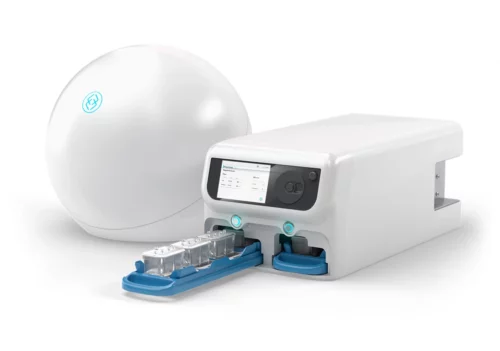
The session then explores how the newly released AVA™ Emulation System enables scalable Organ-Chip experimentation through an integrated system for incubation, microfluidic delivery, and routine imaging. Paired with AI-driven analysis, brightfield image data can be used to automate quality control by monitoring chip health, morphology, and assay performance over time across large studies.

To complete the workflow, post-study high-resolution imaging is applied to evaluate more complex biological markers, including toxicology-relevant endpoints and drug uptake. These datasets are paired with advanced analysis techniques that translate imaging data into quantitative, biologically meaningful insights.

Attendees will gain a practical understanding of how unified imaging and analysis strategies—spanning routine QC through advanced interrogation—support scalability, reproducibility, and alignment with evolving regulatory expectations for Organ-Chips and other NAM-based drug development.

Emulate Community Publications Digest: Spring 2026 Issue

With over 130 peer-reviewed publications across 30+ organ models, Emulate Organ-Chips are empowering researchers to make game-changing scientific breakthroughs! Download this digest to easily explore all publications related to your field of research, or to just learn more about how the technology itself is developing.

New this quarter:

Brain

  • Modeling neurovascular dysfunction in Alzheimer’s disease using an isogenic brain-chip model

Lung

  • Mechanical strain exacerbates Pseudomonas infection in an organoid-based pneumonia-on-a-chip model

Mouth

  • A preliminary model of an oral dysplastic lesion on a chip

Vasculature

  • Human coronary artery organ-chip with circulating immune cells recapitulates anti-inflammatory effect of pulsatile wall strain

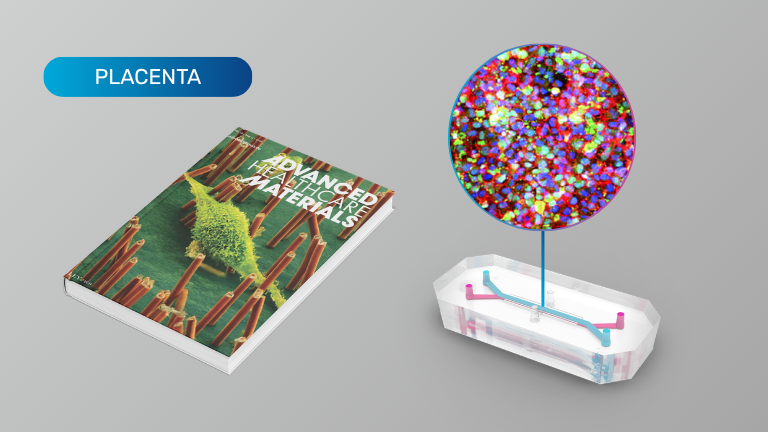
Simvastatin Restores Uteroplacental Hemodynamics and Trophoblast Function in Obstetric Antiphospholipid Syndrome in a Placenta-on-a-Chip Model

Organ Model: Placenta

Application: Immunology & Inflammation

In this study, researchers created a Placenta-on-a-Chip to recreate the maternal–fetal interface and model trophoblast invasion into maternal endothelial tissue under physiologically relevant fluid flow and shear stress. The Placenta-Chip enabled the team to investigate how elevated shear stress, which mimics the abnormal hemodynamics observed in obstetric antiphospholipid syndrome (OAPS), impairs trophoblast invasion and spiral artery remodeling. Using the model, they demonstrated that simvastatin restored trophoblast invasion under high-shear conditions by improving endothelial function, reducing inflammation, and activating the KLF2/eNOS signaling pathway. These findings highlight the value of Organ-Chips for studying placental vascular biology and evaluating potential therapies for pregnancy complications driven by abnormal maternal–fetal hemodynamics.

Products Used In This Publication

Human fallopian tube-on-a-chip for preclinical testing of non-hormonal contraceptives with living human sperm

Organ Model: Fallopian Tube

Application: Reproductive biology

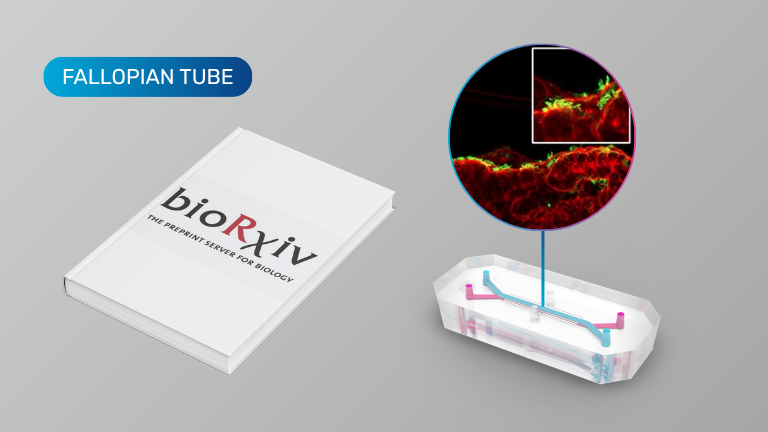
In this study, researchers developed a human Fallopian Tube-on-a-Chip (FT Chip) using primary human fallopian tube epithelial cells and stromal fibroblasts to recreate the structure and function of the fallopian tube under physiologically relevant conditions. The FT Chip generated hormone-responsive epithelial folds that more closely resembled native tissue than conventional organoid cultures and enabled the study of interactions between living human sperm and the fallopian tube microenvironment. By tracking sperm behavior under fluid flow and comparing it with oocyte-sized particles, the model demonstrated the fallopian tube’s role as a sperm reservoir and provided a functional platform for reproductive biology studies. The researchers further used the FT Chip to evaluate the non-hormonal contraceptive TDI-11861, showing dose-dependent inhibition of human sperm motility and highlighting the model’s potential as a preclinical platform for contraceptive testing.

Products Used In This Publication

Human Cervix Chip: A Preclinical Model for Studying the Role of the Cervical Mucosa and Microbiome in Female Reproductive Health

Organ Model: Cervix

Application: Microbiome

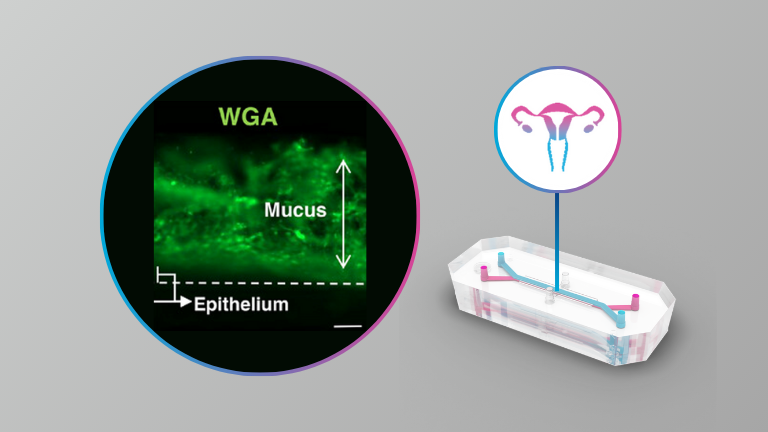
In this review, the authors highlight how the human Cervix-Chip replicates essential cervical functions such as mucus production and responses to hormonal, microbial, and environmental cues. They describe its value as a preclinical model for studying mucosal immunity, microbiome interactions, and risk factors in reproductive health and disease. The chip is presented as a translational platform to advance drug screening, diagnostics, and therapeutic development for women’s health.

Products Used In This Publication

Induction of cervical dysfunction associated with preterm birth by IL-1 and dysbiotic microbiome revealed in human endocervix chips

Organ Model: Cervix

Application: Microbiome

The authors created a human Endocervix-Chip lined with primary epithelial and stromal cells under pregnancy-like hormonal conditions, which reproduced cervical functions such as mucus plug formation with antimicrobial properties. By introducing dysbiotic microbiota, inflammatory cytokines, and immune cells, they modeled pathological processes linked to preterm labor, including inflammation, extracellular matrix degradation, and cervical ripening. The chip was further used to evaluate therapeutics, confirming the ineffectiveness of a discontinued drug while showing that IL-1 receptor blockade prevented cervical dysfunction.

Products Used In This Publication

A Human Cervix Chip for Preclinical Studies of Female Reproductive Biology

Organ Model: Cervix

Application: Model Development, Microbiome

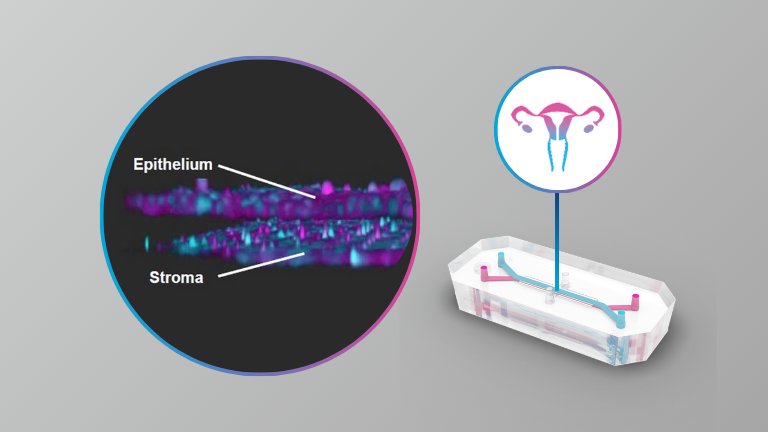
The authors describe a protocol for engineering and studying a highly functional in vitro model of the human cervix that is composed of a commercially available, dual-channel, microfluidic, organ-on-a-chip (Organ Chip) device lined by primary cervical epithelial (CE) cells interfaced across a porous membrane with cervical stromal cells. The provision of dynamic and customized media flow through both the epithelial and stromal compartments results in cell growth and differentiation, including the accumulation of a thick mucus layer overlying the epithelium. The resulting model closely mimics the structure, epithelial barrier, mucus composition and structure, and biochemical properties of the in vivo human cervix, as well as its responsiveness to female hormones, pH, and microbiome. This Cervix Chip protocol also includes noninvasive techniques for longitudinal monitoring of the live 3D tissue model. The Cervix Chip offers a powerful preclinical platform for replicating in vivo cervical physiology, studying disease mechanisms, and facilitating the development of new therapeutics and diagnostics.

Products Used In This Publication

Cervical mucus in linked human Cervix and Vagina Chips modulates vaginal dysbiosis

Organ Models: Vagina and cervix

Application: Microbiome

Abstract

Background: The cervicovaginal mucus that coats the upper surface of the vaginal epithelium is thought to serve as a selective barrier that helps to clear pathogens, however, its role in modulating the physiology and pathophysiology of the human vagina is poorly understood. Bacterial vaginosis (BV), a common disease of the female reproductive tract that increases susceptibility to sexually transmitted infections, pelvic inflammatory disease, infertility, preterm birth, and both maternal and neonatal infections is characterized by the presence of a wide array of strict and facultative anaerobes, often including Gardnerella vaginalis.

Objective: To assess the role of cervical mucus in preventing dysbiosis-associated complications and preserving vaginal health.

Study Design: To better understand the role of cervicovaginal mucus in vaginal health, we used human organ-on-a-chip (Organ Chip) microfluidic culture technology to analyze the effects of cervical mucus produced in a human Cervix Chip when transferred to a human Vagina Chip BV model. Both chips are lined by primary human organ-specific (cervical or vaginal) epithelium interfaced with organ-specific stromal fibroblasts.

Results: Our data show that mucus-containing effluents from Cervix Chips protect Vagina Chips from inflammation and epithelial cell injury caused by co-culture with dysbiotic microbiome containing G. vaginalis. Proteomic analysis of proteins produced by the Vagina Chip following treatment with the Cervix Chip mucus also revealed a collection of differentially abundant proteins that may contribute to the vaginal response to dysbiotic microbiome, which could represent potential diagnostic biomarkers or therapeutic targets for management of BV.

Conclusions: This study highlights the importance of cervical mucus in control of human vaginal physiology and pathophysiology, and demonstrates the potential value of Organ Chip technology for studies focused on health and diseases of the female reproductive tract.

Products Used In This Publication

Mucus production, host-microbiome interactions, hormone sensitivity, and innate immune responses modeled in human cervix chips

Organ Model: Cervix

Application: Microbiome

How Organ-Chips Were Used: The Chip-S1 Organ-Chip consumable was used to create human Cervix-Chips, which represent physiologically relevant in vitro models to study cervix physiology and host-microbiome interactions, and hence may be used as a preclinical testbed for the development of therapeutic interventions to enhance women’s health.

Products Used In This Publication

Modeling Healthy and Dysbiotic Vaginal Microenvironments in a Human Vagina-on-a-Chip

Organ Model: Vagina

Application: Microbiome

Abstract: Women’s health, and particularly diseases of the female reproductive tract (FRT), have not received the attention they deserve, even though an unhealthy reproductive system may lead to life-threatening diseases, infertility, or adverse outcomes during pregnancy. One barrier in the field is that there has been a dearth of preclinical, experimental models that faithfully mimic the physiology and pathophysiology of the FRT. Current in vitro and animal models do not fully recapitulate the hormonal changes, microaerobic conditions, and interactions with the vaginal microbiome. The advent of Organ-on-a-Chip (Organ Chip) microfluidic culture technology that can mimic tissue-tissue interfaces, vascular perfusion, interstitial fluid flows, and the physical microenvironment of a major subunit of human organs can potentially serve as a solution to this problem. Recently, a human Vagina Chip that supports co-culture of human vaginal microbial consortia with primary human vaginal epithelium that is also interfaced with vaginal stroma and experiences dynamic fluid flow has been developed. This chip replicates the physiological responses of the human vagina to healthy and dysbiotic microbiomes. A detailed protocol for creating human Vagina Chips has been described in this article.