
A New Initiative Using Organs-on-Chips Technology

Researchers know that people respond differently to foods, drugs, and chemicals. For example, a medication may be effective in one individual, while it makes another even more ill. Until now, we’ve had no way to test how a diet or a treatment plan would affect a person before administering it to them.

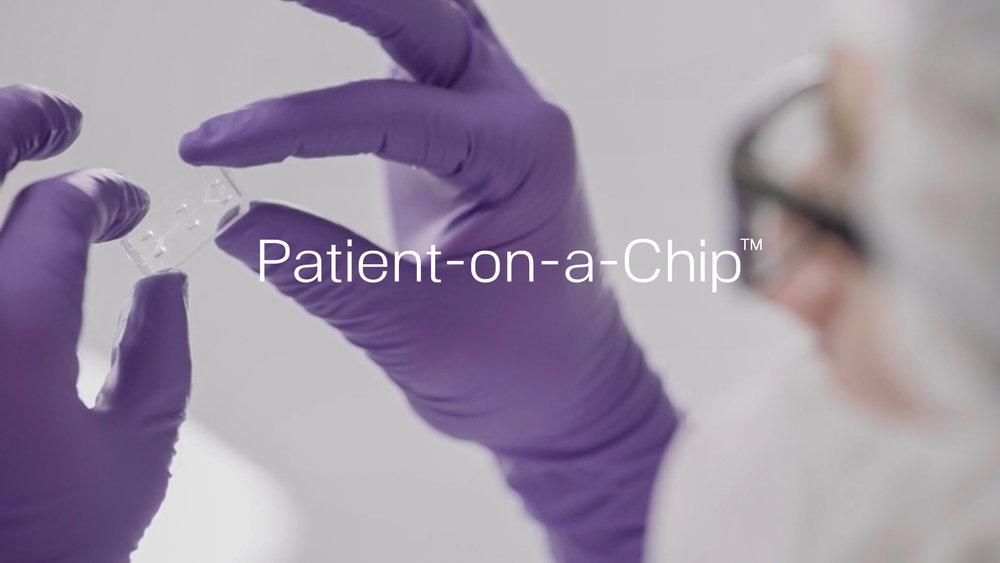
In an effort to provide clinicians with better information about their patients, Emulate has an ongoing program with Cedars-Sinai Medical Center that combines their expertise working with stem cells together with Organs-on-Chips technology. This Patient-on-a-Chip program holds the potential to advance the field of precision medicine and provide clinicians with a new system that more accurately predicts an individual’s response to foods, medicines, and chemicals.

Combining Stem Cells and Organs-on-Chips

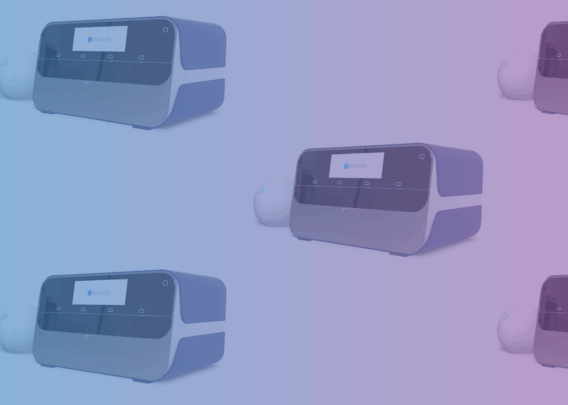
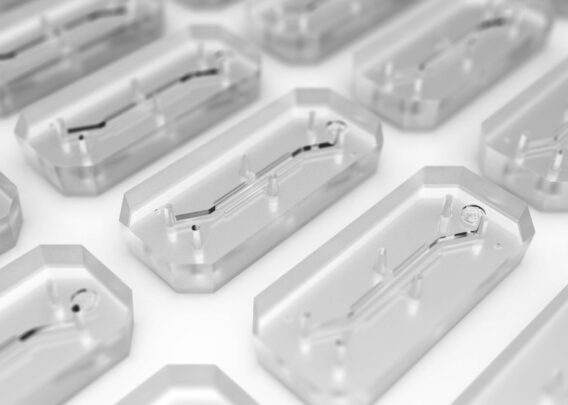
The collaboration leverages innovative stem cell science from Cedars-Sinai and the Human Emulation System, which uses Organs-on-Chips technology to recreate true-to-life biology outside the body. The Human Emulation System creates an environment where cells exhibit an unprecedented level of biological function and gives researchers the ability to control complex human biology and disease mechanisms that are not possible with other techniques.

Cedars-Sinai scientists can harvest cells from the blood or skin of participating individuals. These cells can then be reprogrammed into induced pluripotent stem cells, which can be made into any organ cell, each bearing the unique genetic fingerprint and characteristics of the individual. This process is particularly useful to recreate cells from organs like the brain, which can’t be sampled from a living individual.

By placing a patient’s cells in Organ-Chips and exposing those cells to a particular drug or series of drugs, clinicians could gain better information about how that individual would respond to treatment, avoiding the risk of administering a drug that may cause harm.
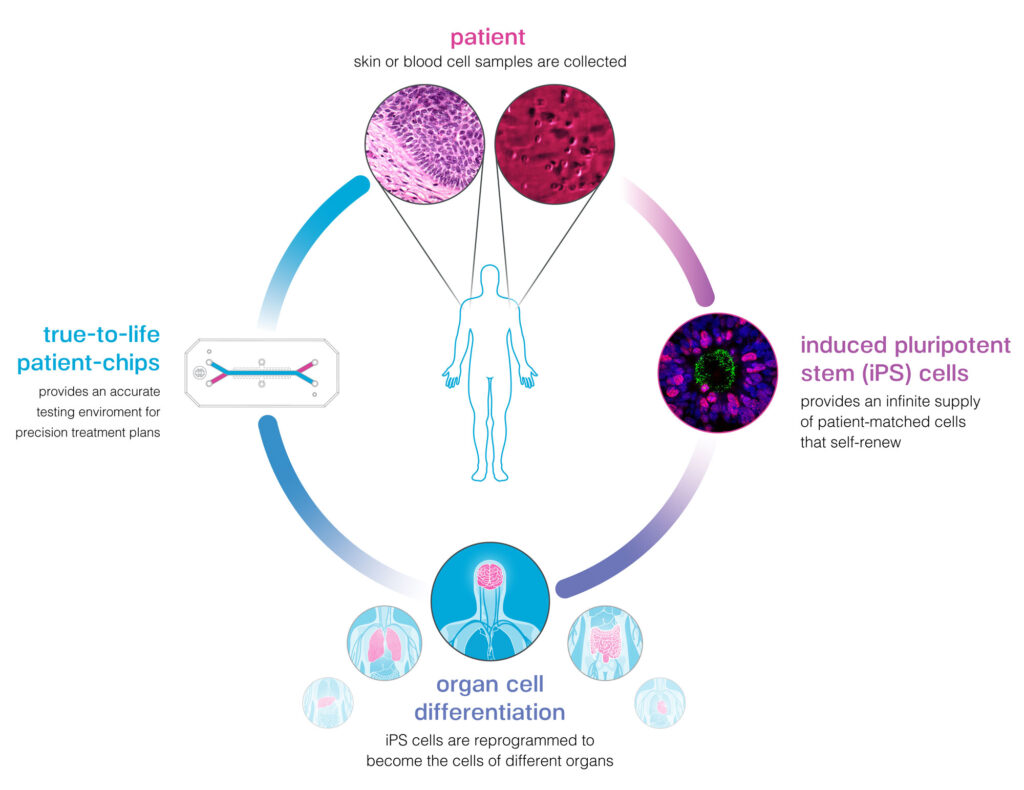
Researchers at Cedars-Sinai can turn cells from a sample of blood or skin into induced pluripotent stem cells, and then reprogram those cells into different organs cells found in the body. These organ cells can then be put on our chips.

The Promise of Precision Medicine

The promise of precision medicine is that when a patient is sick, a clinician will be able to develop a tailored treatment plan that takes into account that patient’s unique biology. Organs-on-Chip technology will provide better information about how a patient will respond to a disease and to a subsequent treatment that will help doctors make more informed decisions.

As science continues to advance, precision medicine will include preventative measures as well. Imagine a recursive circle of precision medicine that integrates the expertise of doctors and clinicians, data generated by wearables and other devices, the analytic and predictive power of artificial intelligence, together with Organs-on-Chip technology.
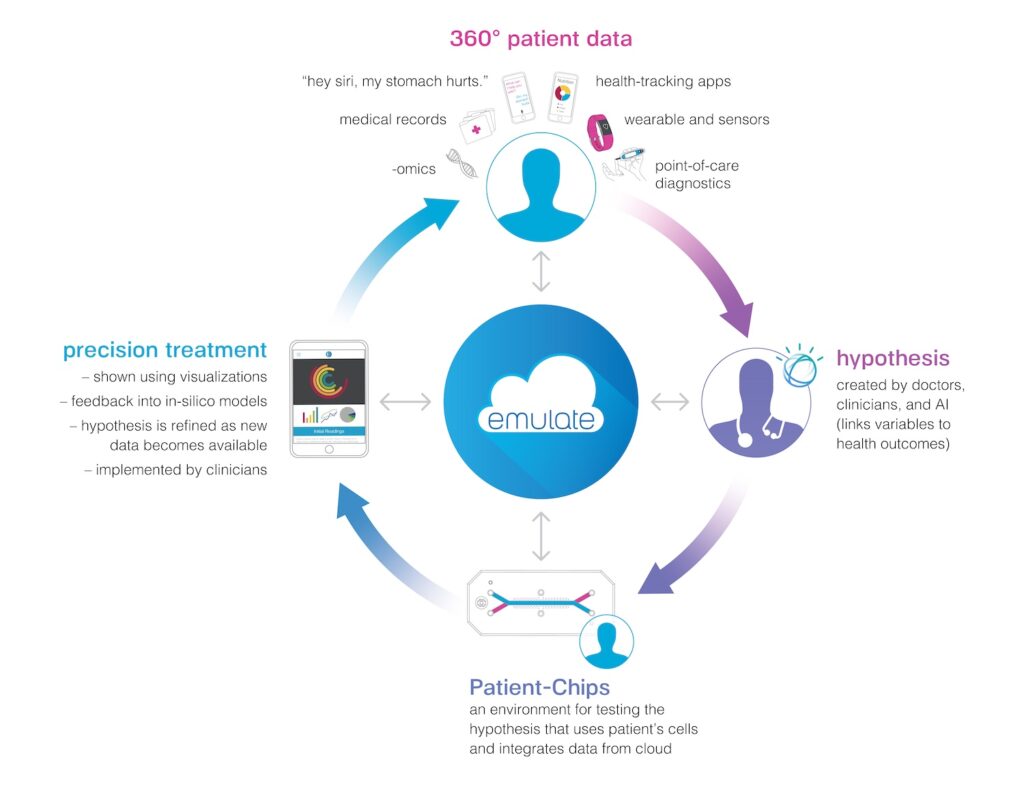
In the recursive circle of precision medicine, the expertise and experiential knowledge of doctors and clinicians will be supplemented with data produced by our living products and the analytic power of AI.

Transforming Care

This project holds the potential to change the way diseases are treated. It will also change the way each of us understands and manages our own health by providing deeper insights into our own biology.

“Cedars-Sinai’s world-class stem cell expertise and discovery, combined with the pioneering Human Emulation System, is poised to reshape the future of medical care,” said Shlomo Melmed, MB, ChB, executive vice president, Academic Affairs, and dean of the medical faculty at Cedars-Sinai.

Initial scientific findings, have been published in Cellular and Molecular Gastroenterology and Hepatology, a journal of the American Gastroenterology Association.

Organ-Chips in Space

Increasing Our Understanding of the Effects of Space on the Human Body

The human body was not designed for space. Low gravity causes muscles to waste away and bones to lose their density. Without the protection of the Earth’s magnetic field, cosmic rays and solar radiation bombard tissue and cells, inflicting damage that could cause disease.

Living out there is psychologically taxing as well. Without the Earthly cycle of night and day, astronauts struggle to maintain their natural sleep schedule, which can lead to changes in mood and mental performance — never mind simply being so far from home, trapped in a living area the size of minivan, with only a few other folks to talk to for months on end.

Still want to volunteer for that nine-month trip to Mars?

Space agencies have designed ways to replicate the condition of low gravity on Earth, but this is only an approximation of the effects of space on the human body and how it will respond. The only way to figure out how an astronaut will react is to put them on a rocket and shoot them into orbit.

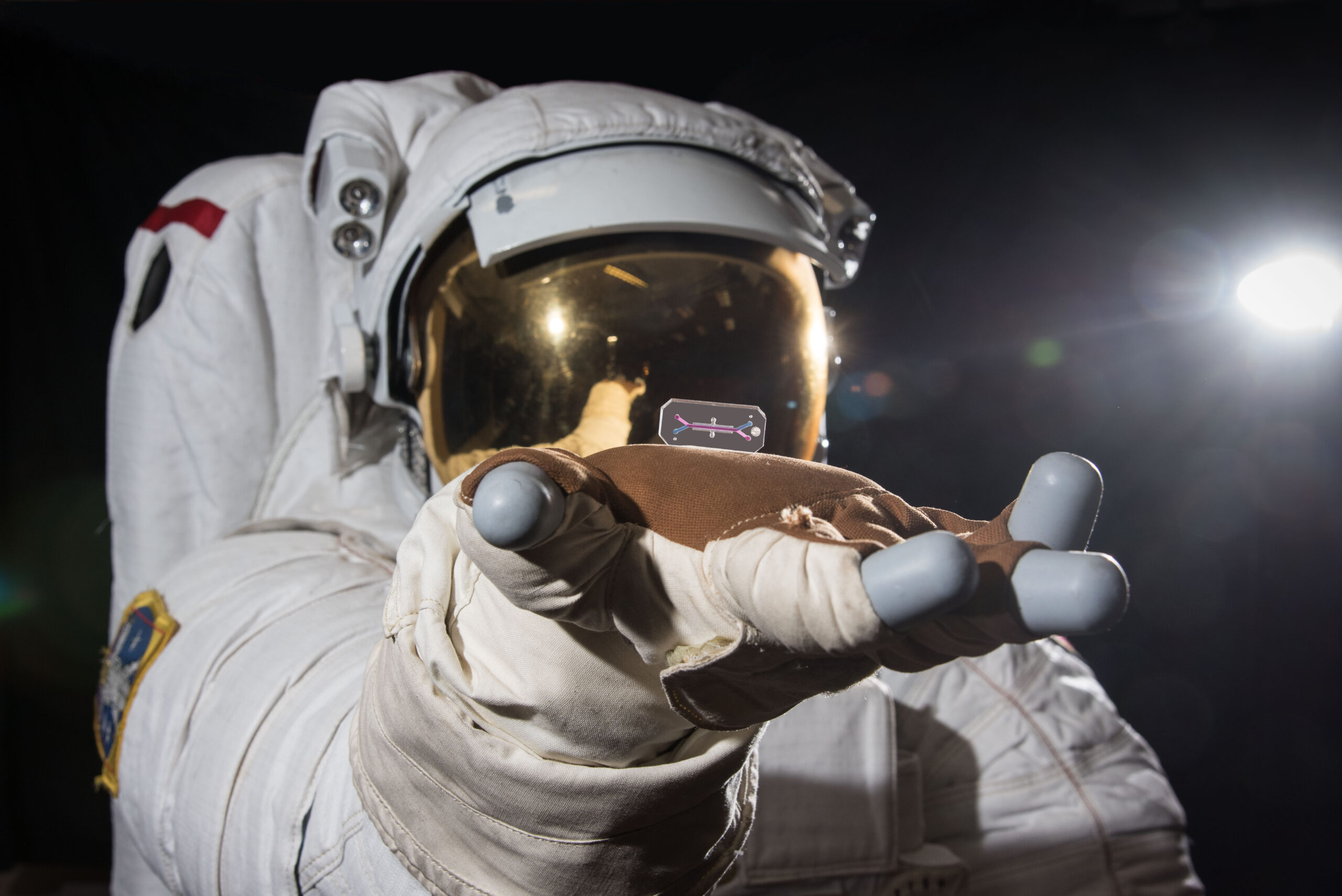
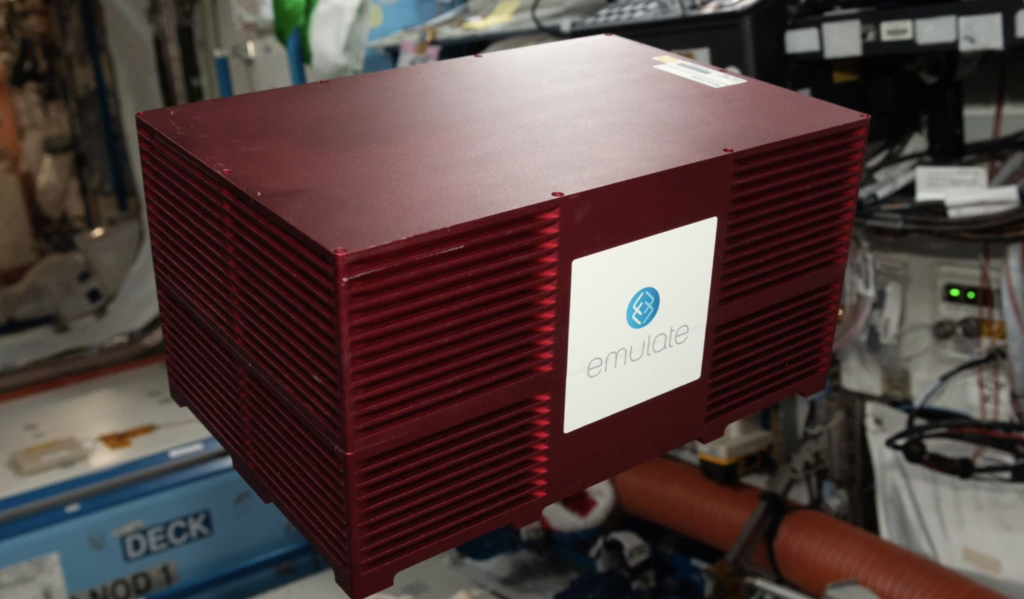
As an alternative, we’ve teamed with NASA and IRPI, a scientific consulting firm, to send our Human Emulation System to the International Space Station (ISS). The goal is to test the cells of astronauts using Organ-Chips in space, providing data about how their body reacts.

Personalized (Space) Medicine

The future of our Organs-on-Chips technology lies in personalized medicine, or the ability to tailor preventative and therapeutic treatments to an individual’s genetics and life experiences. If we could take an individual’s cells and put them on Organ-Chips, we could get an accurate sense of how medicines, foods, and chemicals would affect that person as an individual.

We could then take this process one step further by collaborating with NASA to develop Organ-Chips from the cells of astronauts. Imagine a scenario where an astronaut is in training for a long mission in space. We could take a blood sample from this astronaut, extract stem cells found in their blood, and then engineer those stem cells into different organ cells. This would allow us to create Organ-Chips with DNA that matched the individual astronaut. We could then send those Organ-Chips to space and run experiments on our Human Emulation System aboard the ISS to see how those cells responded in low Earth orbit.

“Eventually, we could send an astronaut’s cells to the ISS before we send him or her up there, getting a sense of how their cells will react to low earth orbit and all the environmental stressors that come along with that,” said Chris Hinojosa, VP, Platform Development at Emulate.

Pushing the Limits of Organs-on-Chips

Nasa Launch

We are democratizing our Human Emulation System by making it easy to use in different kinds of labs throughout the world. But a trip to space could be seen as the ultimate test of our logistics and our platform.

A huge amount of planning goes into launching a rocket, whether it is manned or unmanned. If we can get our Organ-Chips and our lab-ready Human Emulation System into orbit so that they can be used for significant experiments, we’re confident that we can get them to any lab on Earth.

“Pushing the limits of our technology will encourage us to innovate even more, and this kind of work will have a huge impact on our technology,” Hinojosa said.

Deeper into the Unknown

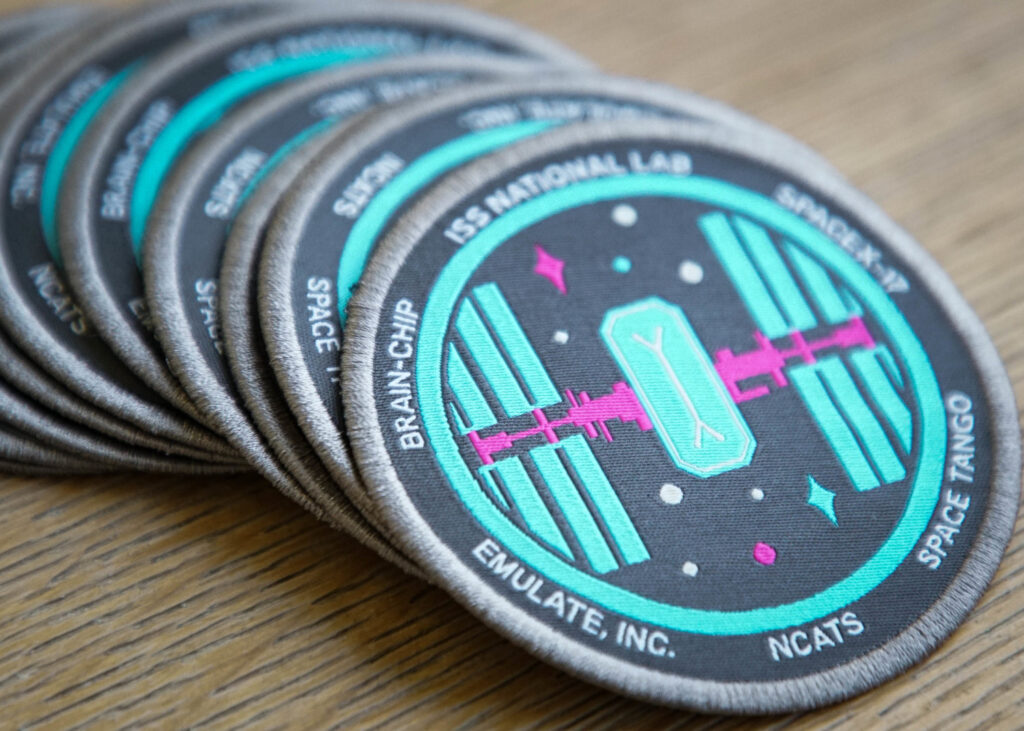
ISS Patch

The ISS circles the Earth at an altitude of approximately 200 miles. As far away as it may seem, the station is still sheltered by a portion of the Earth’s magnetic field, which protects the ISS and the astronauts inside from harmful radiation.

Rarely have humans traveled outside the Earth’s magnetic field. Indeed, the last manned flight outside Earth’s orbit was the final Apollo mission in 1972. And because humans have made so few voyages outside the magnetic field, we simply don’t know how the human body will respond to an extended period beyond its protection.

In the coming decades, we are likely to go deeper into the cosmos than we ever have before. Though still in the planning stage, NASA and private space agencies are working on manned missions to Mars.

The scientific community has a sense of how interplanetary travel will affect human biology. But perhaps our Human Emulation System could be the first human cells to be sent beyond the moon — and provide scientists with information about how to protect astronauts before the first manned Mars mission launches. More about this project can be found on NASA’s website.