
Organ Model: Brain
Applications: Neuroscience, Immunology & Inflammation
Highlights
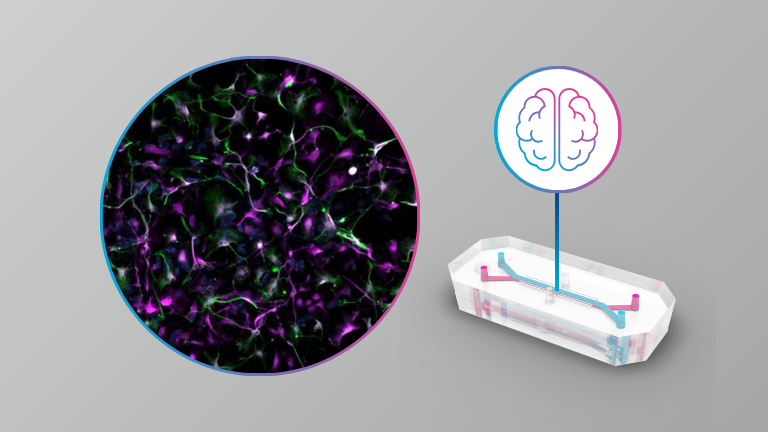
This study demonstrates the development of a human iPSC-derived Brain-Chip model of the neurovascular unit to investigate neurovascular dysfunction associated with Alzheimer’s disease (AD). Using cells from an AD donor and a healthy control, the model revealed blood–brain barrier impairment, altered transporter function, and elevated inflammatory signaling under dynamic flow conditions. Notably, the findings point to Aβ-independent neurovascular dysfunction linked to vascular tau accumulation, highlighting mechanisms that are difficult to isolate in traditional models. Overall, the work illustrates the utility of Organ-Chip platforms for studying complex, human-specific aspects of neurodegenerative disease biology.