
Organ Model: Endometrium
Application: Reproductive Biology
Highlights
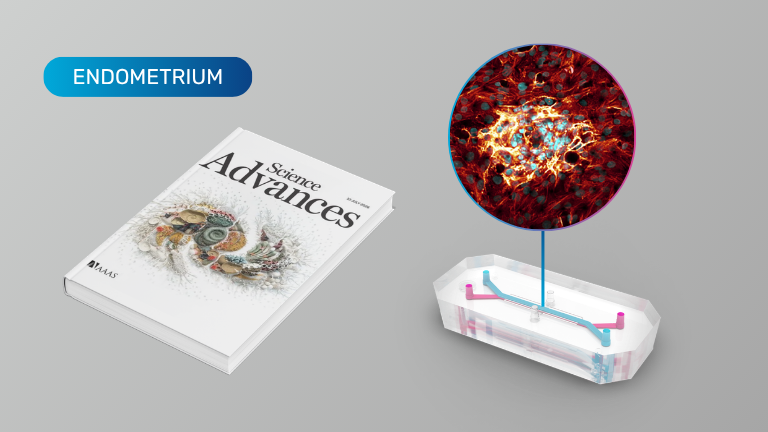
The authors created an endometrium-on-a-chip model containing organoid-derived endometrial epithelial cells in one channel and primary stromal cells in the other. The model reproduced key features of endometrial physiology, including epithelial polarization, stromal decidualization, hormone-induced receptivity, extracellular vesicle secretion, and signaling between the epithelial and stromal compartments. After hormonal treatment, the Organ-Chip supported adhesion of both mouse and human blastocysts, enabling live observation of embryo attachment, trophectoderm spreading, inner cell mass repositioning, and early lineage reorganization. The platform also responded to the contraceptive mifepristone, demonstrating its potential for studying implantation disorders and screening compounds that influence embryo–endometrium interactions.