
Organ Model: Lung Cancer (Alveolus)
Application: Cancer, Immunotherapy
Highlights
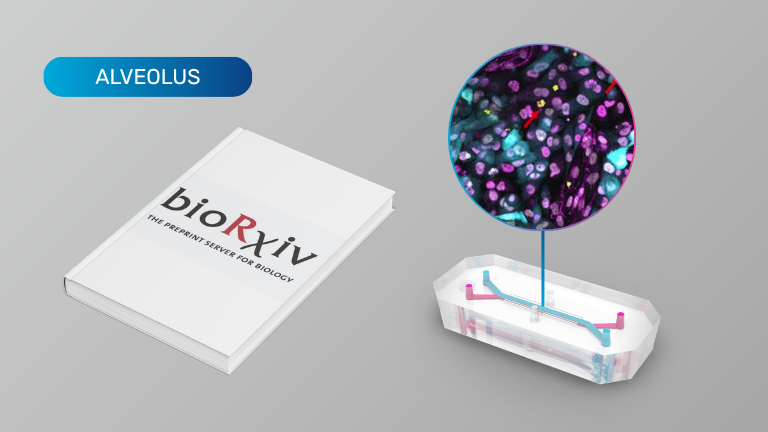
In this study, researchers used a human Lung Cancer-Chip to evaluate the therapeutic activity of a lung-targeted lipid nanoparticle (LungLNP) delivering an immunostimulatory duplex RNA (RNA-1) in a physiologically relevant human lung tumor microenvironment. The Lung Cancer-Chip recreated the alveolar interface by co-culturing human alveolar epithelial cells, pulmonary microvascular endothelial cells, and GFP-labeled A549 lung cancer cells under vascular perfusion, enabling intravenous-like dosing through the endothelial channel. Treatment with LungLNP/RNA-1 produced dose-dependent inhibition of tumor growth, stimulated secretion of interferons and pro-inflammatory cytokines, and revealed preferential uptake of the therapeutic by endothelial cells. These findings demonstrate the utility of Organ-Chips for evaluating targeted RNA therapeutics, elucidating mechanisms of cellular uptake and innate immune activation, and validating anti-tumor efficacy in a human-relevant tissue model.