
Organ Model: Intestine (Ileum)
Application: Immunology & Inflammation
Highlights
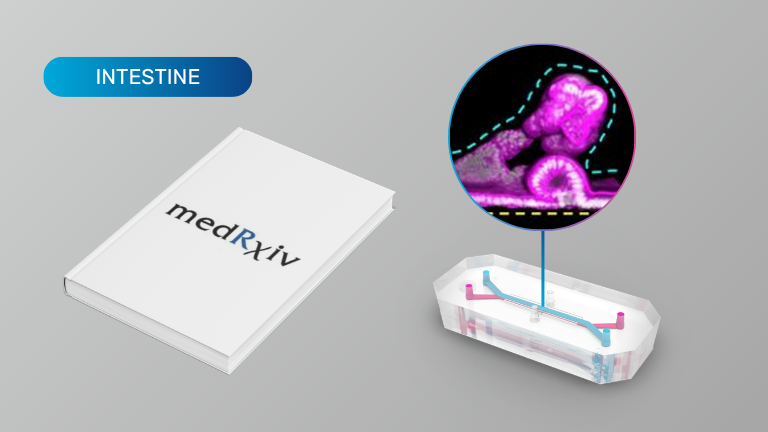
Researchers created a human Ileum-Chip model of acute radiation injury using patient-derived ileal epithelial cells cultured alongside intestinal microvascular endothelial cells under flow and peristalsis-like mechanical motion. When exposed to clinically relevant doses of gamma radiation, the model reproduced key features of intestinal radiation injury, including epithelial cell loss, villus blunting, barrier disruption, inflammation, and reduced mucus production, as well as the protective effects of the probiotic formulation VSL#3 observed in patients. Transcriptomic data generated from the Organ-Chips were then analyzed using the AI-based drug repurposing platform NeMoCAD, which identified the antifungal drug miconazole as a potential radiation countermeasure. Testing miconazole back in the Ileum-Chip confirmed its protective effects and provided insight into a potential MMP9-mediated mechanism, demonstrating how Organ-Chips can be paired with AI for both therapeutic discovery and human-relevant validation.